AI + Art = Handmade Intelligence
The form comes first, the material leads, AI responds, and Human imagination drives it all.
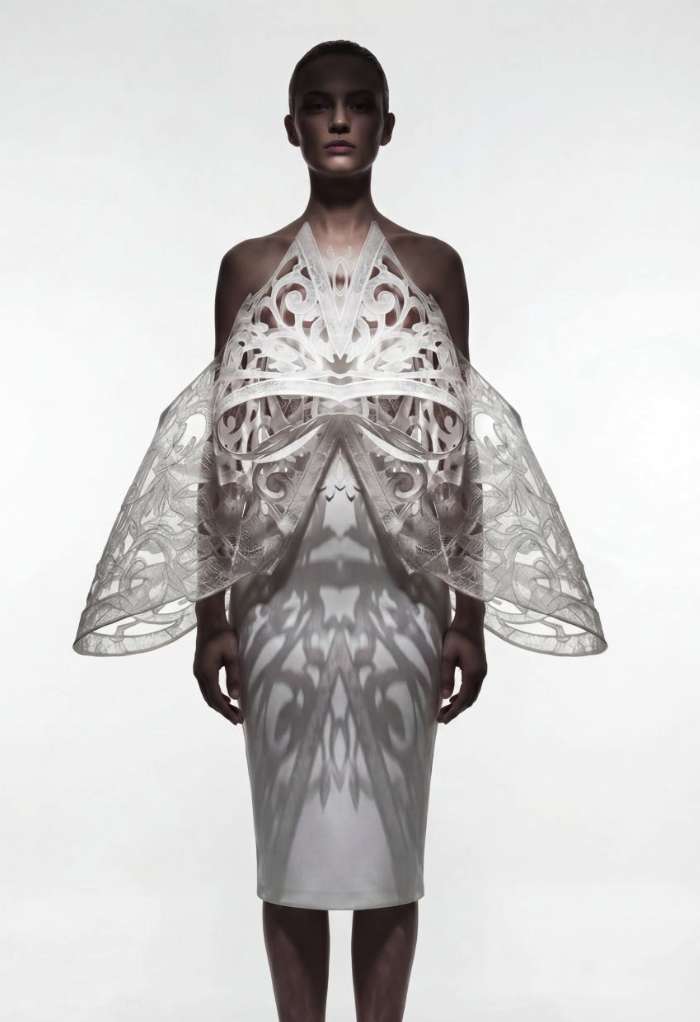
Student Project by Bhaviya
Think like a human. According to art and design educator John Cash, that’s the best way to maintain authorship over the creative output visual technology is now capable of producing.
Building on years of experience at UK universities, John realized that without the right mindset, learning to use the technology alone, even the most talented students produced dull, repetitive results—slop. I’ll let John explain.
“For much of my career, I have been interested in how ideas emerge through making. I believe that creativity develops through experimentation, play, and direct engagement with the material world. Making is not simply a way of producing outcomes; it is a way of thinking. This philosophy led me to develop Paper to Pixel—a material-first methodology that combines analogue experimentation with AI-assisted exploration.”
A single sheet of A4 paper is where the Paper to Pixel learning experience begins.

Stage 1 Planning, Drawing, and Cutting
"Paper to Pixel starts with the hand — cutting, folding, and constructing physical paper forms. These forms become the origin of the design process, ensuring that authorship remains grounded in material exploration rather than delegated to the machine.”
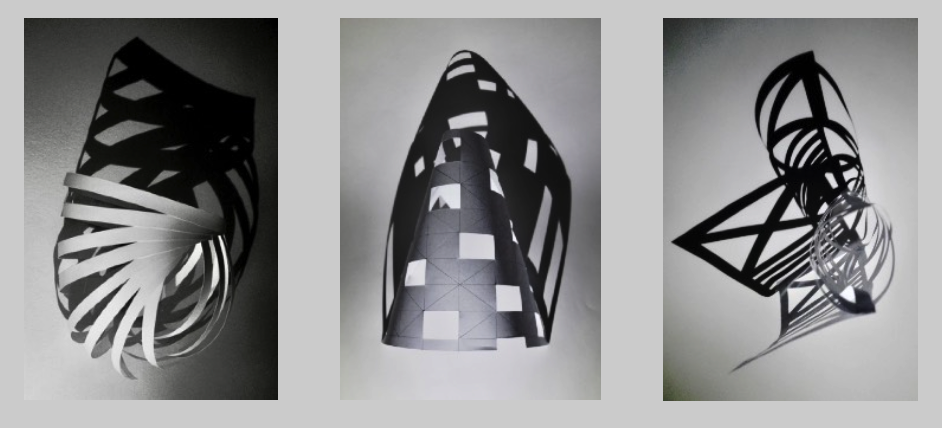
Stage 2 Spatial Transformation: From 2D to 3D
By manipulating a simple piece of paper, his students improve their analytical thinking, critical judgment, and aesthetic sensibilities. They also learn to skillfully translate their choices into physical outcomes, such as clothing, interiors, architecture, landscapes, or city planning. John insists that AI is not a shortcut; it’s an interpretive tool.
To invent original ideas, John believes it’s essential for humans to understand their role as creative authors.
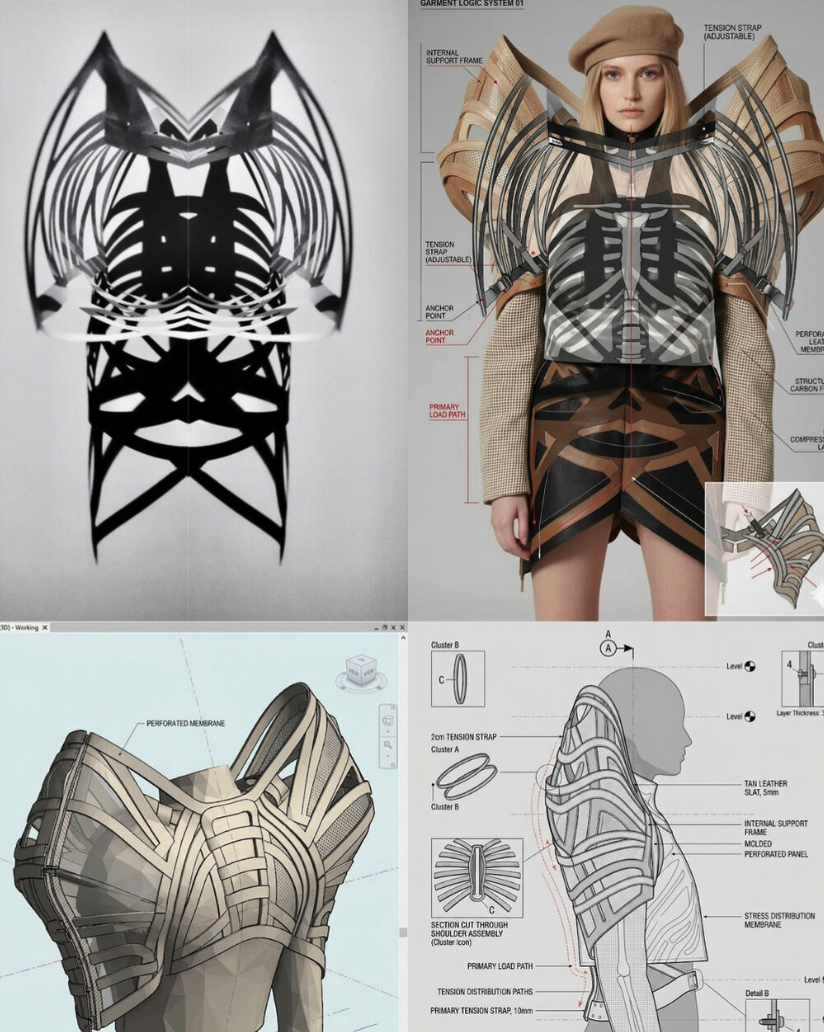
Stage 1 through 4 Paper to Pixel
“By working with abstract forms that have no precedent in existing datasets, the process disrupts algorithmic repetition and forces the system into unfamiliar territory. AI interprets the structural intelligence already embedded within the paper form. The designer establishes the conditions. AI extends the possibilities.
In this way, Paper to Pixel repositions AI not as a generator of ideas, but as an interpretive partner extending the designer’s authorship while preserving the primacy of form, material, and human intent.”
The following short film highlights the process, starting with the hand-cut forms and ending with products visualized by AI. John describes the ideas you’ll see materialize.
“Because the methodology begins with original abstract forms that have no direct precedent or intention within conventional fashion imagery, the process encourages interpretations that move beyond familiar visual patterns. Instead of repeating established aesthetics, AI is invited to respond to something materially new, allowing unexpected design directions to emerge.”
Work by students: Bohdan Naumov, Stefan Trajkovski, Samuel Sant, Olu Dada, Yanjie Yang, Denisa Durica, Danielle Modzaku, Teodora-Maria Butuc, Shion Tanaka, Jason Gao and Edward George.
Ultimately, my work asks a simple question: What should happen before the prompt? I believe the future of creative education lies not in resisting AI, but in ensuring that material exploration, creative authorship, and human imagination remain at the center of the design process.” - John Cash
For more information on John Cash, Paper to Pixel, and his digital learning platform, OAS, you can reach him on Linkedin: